
For decades, DAP (diammonium phosphate) has been the go-to phosphorus source for wheat, rice, vegetables and nearly every major crop in India. It worked, and the price was fair, so few farmers questioned it.
That's changing. DAP costs keep rising, supply depends on imports, and many farmers who have used it for 15–20 years say the same dose now gives them less. PROM, short for Phosphate Rich Organic Manure, keeps coming up as an alternative. Here's what it is and whether it fits your farm.

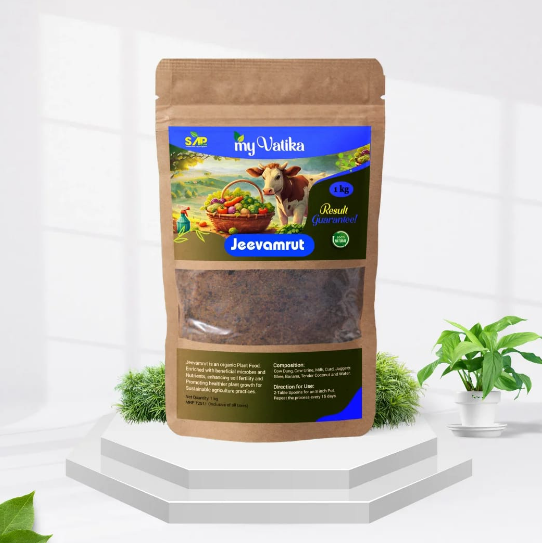
Bio DAP - PROM – Phosphate Rich Organic Manure (PROM) | Organic Phosphorus Fertilizer
What is PROM?
PROM is made by co-composting rock phosphate with organic matter such as cow dung or crop residue, using phosphate-solubilizing microorganisms. This turns hard-to-use rock phosphate into a form plants can access, and gives you mature compost in the same product.
Per kilogram, PROM carries less phosphorus than DAP (about 10–12% P2O5 versus 46%). But it also brings organic matter, beneficial microbes and secondary nutrients that DAP doesn't.
How PROM and DAP differ
DAP releases phosphorus fast, which is why crops respond quickly. The catch is that much of it gets "fixed" by soil particles. Studies suggest only 15–20% is taken up by the crop in the season it's applied.
PROM works more slowly. Its microbes keep releasing phosphorus through the season, closer to what the plant actually needs. Organic matter helps hold that phosphorus in a usable form, and the microbes can even unlock some of the phosphorus left behind by years of DAP use.
Other benefits
-
Adds organic matter, improving soil structure and water retention
-
Supports stronger, deeper roots
-
Rebuilds microbial life in soils worn down by chemical inputs
-
Doesn't acidify soil the way long-term heavy DAP use can
Is it a complete replacement?
Honestly, not in season one. Because PROM is lower in phosphorus and slower to act, you may need a higher quantity than your usual DAP dose, and early-season response can be a little slower. From the second season, as soil biology recovers, many farmers find they can hold yields with less total phosphorus input. For home gardeners and small vegetable growers, PROM works very well as a main phosphorus source.
How to use PROM
-
Vegetable crops: 50–100 kg per bigha, mixed into the top 15–20 cm of soil during land preparation
-
Fruit trees: 500 g to 1 kg around the drip line each year
-
Pots: 1–2 tablespoons per litre of potting mix, added before planting
Apply it as a basal dose so microbes have time to settle in. It pairs especially well with mycorrhiza (VAM) bio fertilizer.
Bio DAP - PROM – Phosphate Rich Organic Manure (PROM) | Organic Phosphorus Fertilizer
The practical approach
If you want fast phosphorus in the first two weeks, DAP is quicker. If you're thinking beyond one season, PROM makes more sense. A sensible transition is to cut DAP by 50%, add PROM, and reduce DAP further as your soil improves.
📞 Order PROM online: sapmyvatika.com | Kisan Helpline: 7303037568 ✅ ICAR Recommended | DPIIT Recognised | ISO 9001:2015 Certified