Leaf compost gets less attention than vermicompost or cow dung compost. Its NPK numbers are modest and it doesn't give a dramatic quick response. But for long-term soil health, it does something very valuable.

Leaf Compost
What it is
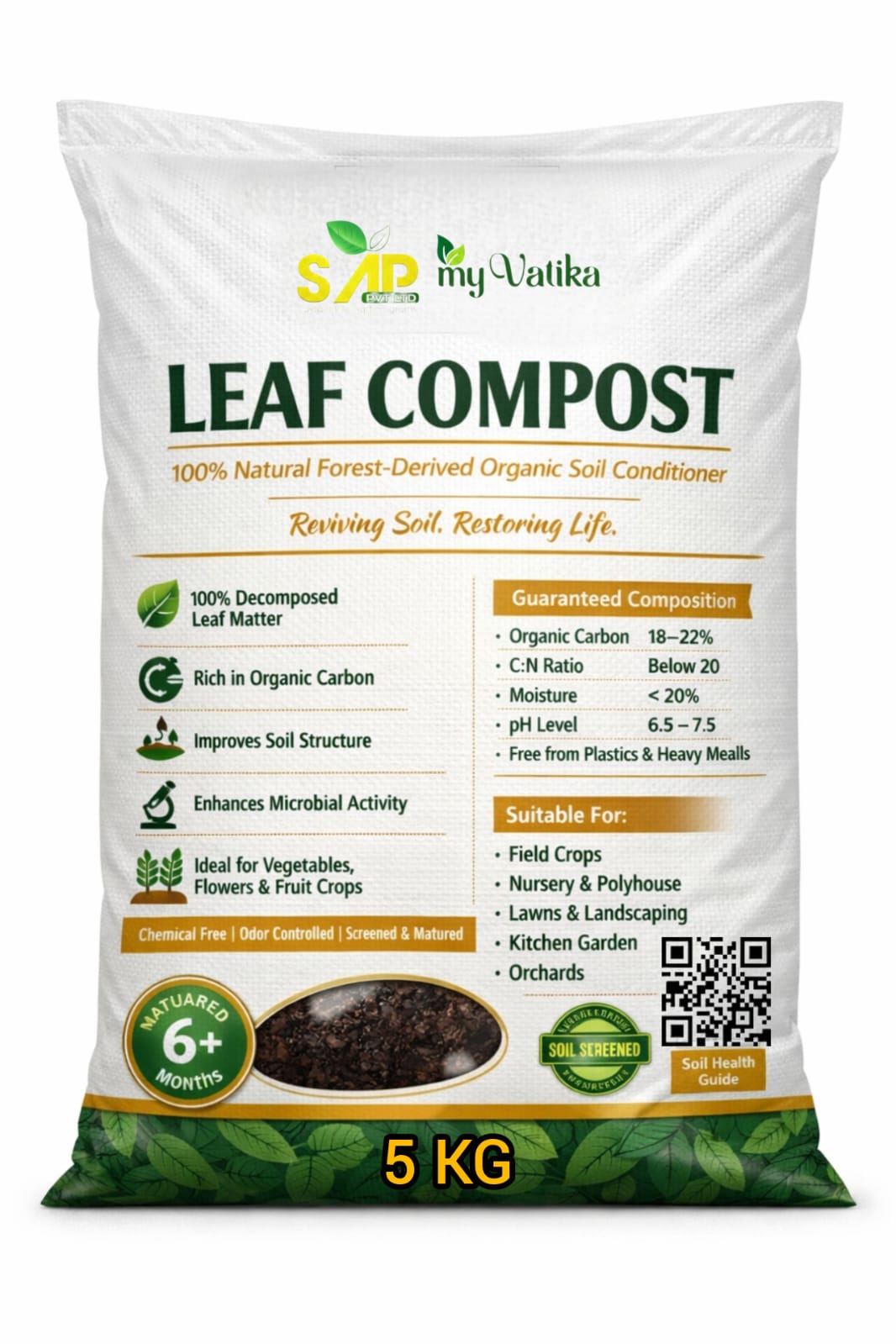
Leaf compost, also called forest compost or leaf mould, is decomposed leaf litter, the same material forest floors produce naturally. SAP MyVatika's Leaf Compost is 100% natural, forest-derived and free from plastics and heavy metals.
What it does for your soil
-
Adds organic carbon: the fuel for soil microbes and the biggest driver of long-term fertility. Most heavily cultivated Indian soils are low in it, which is why they need ever more fertilizer.
-
Improves texture: its fibres open up heavy clay and help sandy soil hold moisture and nutrients.
-
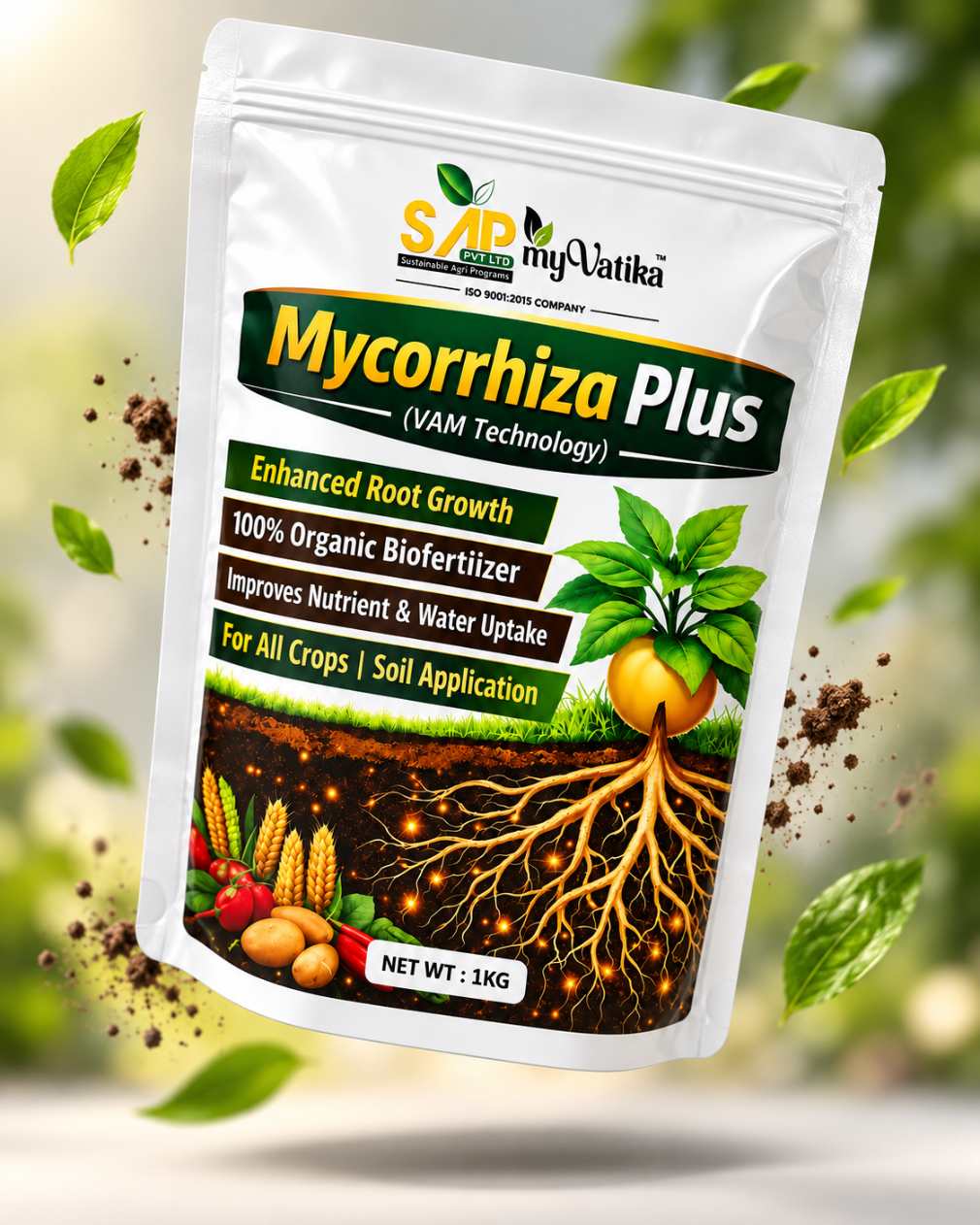
Supports beneficial fungi, including mycorrhiza, making your other organic inputs work better.
The effect is steady and cumulative rather than instant.
Where it works best
-
Garden and raised beds: worked in yearly before planting, especially useful in urban beds that get depleted quickly
-
Mulch: a 3–5 cm layer retains moisture, suppresses weeds and cools soil in summer
-
Potting mix: adds organic matter and structure without the high nutrient load of vermicompost
-
Lawns: fine compost as a topdressing improves soil beneath the turf
How to use it
-
Beds: 2–3 kg per square metre in the top 15–20 cm each season
-
Mulch: 3–5 cm layer, kept clear of stems, refreshed yearly
-
Potting mix: 15–20% by volume, alongside cocopeat and vermicompost
Pair it with vermicompost or murgi khaad for nutrition. Think of leaf compost as the foundation layer.
📞 Order online: sapmyvatika.com | Kisan Helpline: 7303037568 ✅ ICAR Recommended | DPIIT Recognised | ISO 9001:2015 Certified
Leaf Compost